Facebook Zoomed in How Do I Zoom Out Again
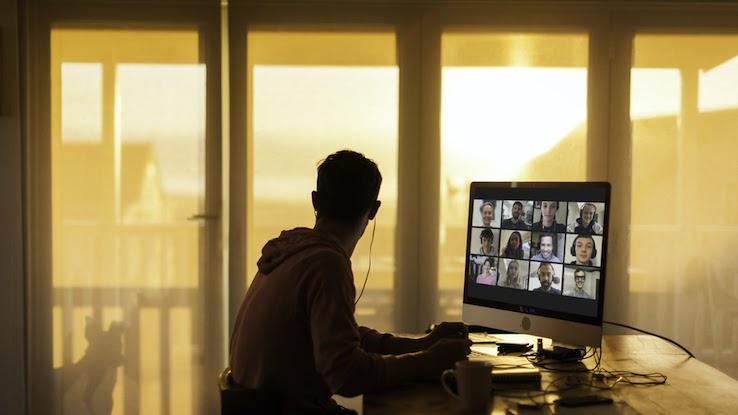
In a March 2020 conversation with GeekWire, Zoom's Chief Executive Officer Eric Yuan described what he believed would be a permanent and central shift in the ways we work: using video for remote worker collaboration. People worldwide accept seen the job-related affect of Zoom and similar meeting technologies as these tools have become essential for communication throughout the COVID-19 pandemic. And they've certainly been helpful for facilitating meetings with colleagues — but they may also be making a bigger affect on our mental wellness and well-being than we might've anticipated.
According to the International OCD Foundation, approximately one in 50 Americans lives with a condition called body dysmorphic disorder (BDD), which affects how people experience about their physical appearance. People with BDD take been experiencing intensifying symptoms in the wake of the coronavirus pandemic, in part because spending so much time on photographic camera in virtual meetings is making information technology easier to fixate on the mode we look. But how exactly does this condition relate to Zoom calls? It turns out that people who've been spending more fourth dimension than e'er in video conferences are showing some of the symptoms of BDD, leading to an consequence some health experts are colloquially calling "Zoom dysmorphia."
As Zoom meetings and other video-based interactions become increasingly common and in-person interactions abound rarer, we're spending a lot more time staring at people's faces — and realizing that they're spending an equal amount of time seeing ours. Rates of self-paradigm insecurity, BDD and mental health challenges are increasing, and our regularly scheduled online appearances may have something to do with it — so much so that "Zoom dysmorphia" was coined to describe the mental health furnishings we're experiencing from looking at our perceived flaws on camera and wanting to change them. Whether you lot apply Zoom for fun or for piece of work, here's what y'all demand to know near the miracle.
What Is Body Dysmorphia?
BDD is a mental health status that causes someone to become broken-hearted nigh or obsessed with something they perceive is a physical flaw somewhere on their body. In some cases, the perceived flaw exists but is minor and other people don't notice information technology. In other cases, the flaw is imagined and doesn't exist at all. In both cases, someone with BDD believes the flaw is severely exaggerated. They then develop a "distressing preoccupation" with their physical appearance and the specific torso part they focus on, notes the Feet and Depression Association of America. This obsession with the perceived flaw can crusade someone with BDD to avert social situations because they feel aback and anxious.

According to the Cleveland Dispensary, BDD sometimes occurs with other mental health weather condition, such as eating disorders, anxiety disorders and obsessive-compulsive disorder. BDD affects people of all genders and ages, and information technology typically arises in someone'southward teens or early adult years. Because BDD is often comorbid with similar mental wellness issues, people who live with this disorder frequently develop compulsive behaviors involving their appearance. They might frequently wait in mirrors or avoid mirrors altogether, or they may spend hours a solar day training themselves in an endeavour to minimize their perceived flaws, which they believe others will focus on.
What Is Zoom's Function in Torso Dysmorphia?
In an August 2020 Faddy article titled "How Staring at Our Faces on Zoom Is Impacting Our Self-Prototype," Dr. Hilary Weingarden, a BDD expert at Massachusetts Full general Infirmary, described some of the unique challenges that people with BDD take begun dealing with more frequently in the age of Zoom interactions. "We're hearing that [patients are] becoming fixated on worrying about their own advent during [a] call; getting stuck fixing their advent for the call past changing their makeup, lighting or photographic camera bending; and getting distracted during the telephone call past comparing their appearance to others."

While these Zoom-induced fixations are impacting people with BDD at worrying levels, they're also affecting people who don't have BDD but who still experience dissatisfaction with their advent. This doesn't hateful that there'southward something "wrong" with having a want to put your best face forward during an online coming together. But this fixation can become harmful when it doesn't subside. As it becomes more pervasive, focusing on your appearance during video conferences tin can pb to a distortion of your cocky-image and undermine your mental health.
As Dr. Weingarden explains, "Over-focusing on your advent for prolonged periods of time can actually misconstrue your perceptions so that you lot're no longer really seeing yourself clearly." At its most mild, this "Zoom dysmorphia" can disrupt our focus a trivial during a meeting. But equally information technology continues, it tin can cause the states to experience increasingly negative emotions about ourselves — negative emotions that we internalize to a point that we feel the need to alter our appearance.
Plastic Surgery Is Besides Experiencing an Unprecedented "Zoom Nail"
Plastic surgeons in the United States and effectually the world have reported a fasten in requests for surgical procedures during the COVID-19 pandemic, which may chronicle to the increased use of Zoom. A Dec 2020 article in The Washington Post cited the feel of plastic surgeons in Cincinnati, Beverly Hills and New York who reported spikes in inquiries well-nigh and requests for Botox and Xeomin injectables and fillers to eliminate wrinkles, along with eyelid lifts, nose jobs, facelifts and procedures that focus on patients' necks and jawlines.

Some of the surgeons attributed the requests to people paying more attending to their own advent due to the apply of Zoom. The Cincinnati-based plastic surgeon elaborated, noting, "During the virtual consultations, nine out of 10 people commented nigh noticing these things over Zoom." Yet, the spike in demand has besides been attributed to the fact that people who were already interested in plastic surgery had more than fourth dimension on their easily while isolating at dwelling house — where they had the selection to heal privately.
The "Zoom Blast" phenomenon isn't entirely Zoom's mistake, nor is it totally COVID-19-related. A paper titled "A Pandemic of Dysmorphia: 'Zooming' Into the Perception of Appearance" noted that 72% of members of the American Academy of Facial Plastic and Reconstructive Surgery reported doctors were seeing patients who wanted plastic surgery to improve their appearance in selfies in pre-COVID 2019. The miracle was then pregnant that information technology was dubbed "Snapchat dysmorphia" in reference to that app's feature-altering filters and users' desire to expect like filtered images of themselves.
Unlike Snapchat and its wide array of filters, though, Zoom tends to give a more accurate moving picture of one's true appearance — for better or worse. That might be one reason why the same paper reported a fasten in Google searches for terms like "acne" and "pilus loss" during the pandemic. Either way, the Zoom Boom appears to be an extension of a wave of digital-induced dysmorphic tendencies related to seeing ourselves on screens.
Beat Zoom Gloom With These Tips for Boosting Your Mental Health
While social media apps and video-conferencing platforms can take negative effects on users' mental wellness and cocky-prototype, they're likewise essential for helping united states connect with friends, family unit and coworkers during this stressful time. Beingness intentional and careful well-nigh using these technologies is important, of course, merely quitting them altogether could exist harmful in entirely different ways. Here are a few tips psychotherapist Dr. Annette Nunez and social worker Alyssa Mancao shared with MindBodyGreen virtually using Zoom in a way that protects your cocky-image:

The quickest and simplest solution? Turn off the camera. If no one else can run into you, you may be less concerned most your appearance and the style you await to others.
Leave your camera on, but cover your ain image on the screen with a pasty note. It'll proceed you from examining yourself so closely and encourage y'all to appoint with everyone else instead.
Develop some positive affirmations to support yourself. Employ them in what psychotherapist Annette Nunez calls "mirror work." This involves looking at your reflection in a mirror and repeating positive statements almost yourself several times a 24-hour interval.
If you observe negative thoughts at the end of a Zoom meeting, write them down so yous tin can understand any thought patterns that are affecting you lot. Identifying them might help you to understand them and fifty-fifty bring them nether control.
Are you jumping onto a Zoom phone call? Don't spend your terminal few minutes before the call scrolling through social media. Seeing filtered photos of other people and comparison yourself to them can affect your mood.
Source: https://www.ask.com/culture/zoom-dysmorphia-how-affect-well-being?utm_content=params%3Ao%3D740004%26ad%3DdirN%26qo%3DserpIndex
0 Response to "Facebook Zoomed in How Do I Zoom Out Again"
Post a Comment